50 Favorite Plants
This page was inspired by the Seed Site's Plant Profiles. Plants are listed alphabetically by their scientific name. Click on the plant name to show an image of the most distinctive part of the plant (must have resolution greater than 1400px). Try to move it! Public domain images are used until I can replace them with my own.
In progress. 12% complete
Monarda fistulosa (bee balm) | Lamiaceae
Description


- Native range: North America
- Status: secure
- Flowers: compact lilac flower clusters growing solitary at the end of branches
- Fruits: four brown nutlets forming at each calyx
- Leaves: serrated, opposite, lanceolate, greyish-green
- Stem: square, purple-reddish, erect
- Fun fact: indigenous peoples distinguished varieties based on fragrance
Why I like it
The bees go crazy for this plant. I stumbled across a field of it when hiking and was amazed at all the insect life. It is used medicinally to treat colds and infections. Steep in honey to make a syrup or high-proof vodka to make a tincture.
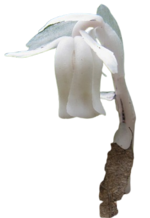
Monotropa uniflora (ghost pipe) | Ericaceae
Description
- Native range: Northern hemisphere
- Status: secure
- Flowers: ghostly white, drooping, solitary
- Fruits: upright oval capsules that split and releases seeds when dry
- Leaves: small, translucent sheathes
- Stem: smooth, waxy, fungus-like
- Fun fact: instead of photosynthesizing, it parasitizes nearby plants through mycorrihizal networks
Why I like it
Spooky flower found in the dark understory of mature forests. Very mysterious-looking. Cherokee legend says it grows where friends and family have quarreled.
Narcissus psueodonarcissus (daffodil) | Amaryllidaceae
Description

- Native range: Europe
- Status: secure
- Flowers: golden trumpet surrounded by pale yellow tepals
- Fruits: capsule with three locules; dry and splits open when ripe
- Leaves: long, linear leaves growing from the base (basal)
- Stem: long, green scapose stem growing from a bulb
- Fun fact: plant parts are toxic but contain galantamine which can be used as treatment for Alzheimer's
Why I like it
Although these aren't native to where I live, I find them strikingly beautiful. This was the first flower I recognized as a child and love to see them appear during spring.
Passiflora incarnata (passionflower) | Passifloraceae
Description


- Native range: southeastern to central USA
- Status: secure
- Flowers: white petals with purple corona filaments
- Fruits: edible green berry ripening into a yellow-orange wrinkly ball, referred to as 'maypop'
- Leaves: alternate, palmate with 3-5 lobes
- Stem: trailing vine with many tendrils, smooth or pubescent
- Fun fact: seeds germinate in darkness (negative photoblasticism)
Why I like it
The stunningly intricate flowers look like something from another planet. Parts of the plant can be brewed into a medicinal tea with a calming, sedative effect.
Phytolacca americana (pokeweed) | Phytolaccaceae
Description

- Native range: eastern USA
- Status: secure
- Flowers: white sepals in a drooping raceme
- Fruits: a shiny dark purple berry in racemose clusters with pink penducles
- Leaves: coarse, alternate, entire
- Stem: erect, green turning redish purple late in the season, dies back to the root in the winter
- Fun fact: uptakes heavy metals out of the soil and can be used for phytoremediation
Why I like it
I find the contrast of the dark berries with the pink penducles delightful. They often grow in industrial wastelands, which makes me hopeful that life can find a way.
Symplocarpus foetidus (skunk cabbage) | Araceae
Description
- Native range: eastern North America
- Status: secure
- Flowers: round spadix surrounded by a maroon spathe; temperature inside in the spathe is 60 degrees higher than ambient air
- Fruits: hard, round, brown seeds that drop into the mucky substrate if not eatened by birds first
- Leaves: unfolding green leaves after the flower and spathe wilts
- Stem: found below the surface
- Fun fact: spiders take advantage of the plant by building webs at the entrance of the spathe to catch unsuspecting flies that are attracted to the plant's stinky smell
Why I like it
The first flower to appear in early spring when snow still blankets the ground. I haven't noticed a pungent smell from it, but I have never put my face in it. New mission: put my face in it and smell that stink.
medicinal edible toxic  pollinator attractive bird attractive